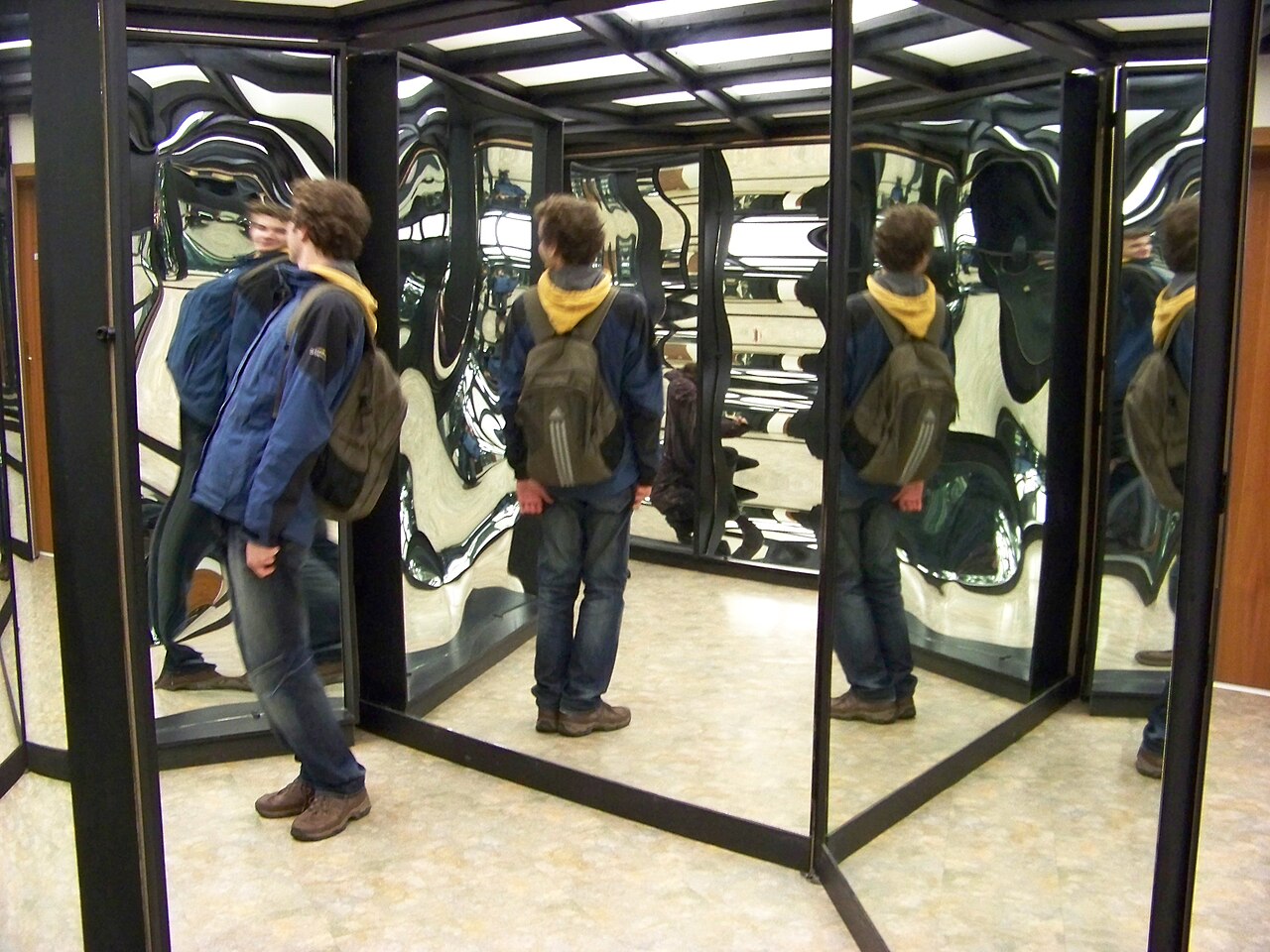
A mirror maze is one of the oldest and most joyful tricks an amusement park can play on your eyes, and it remains a highlight of any funfair attraction in 2026. You step in expecting a short walk, then spend ten happy minutes bumping into your own reflection. This guide explains how these attractions work, where they came from, and how to get the most out of your visit.
Whether you are planning a family day out or simply curious about the mechanics behind the illusion, understanding the basics changes the experience. You notice the clever design, spot the dead ends earlier, and enjoy the puzzle instead of just stumbling through it. The tips ahead cover everything from reading reflections to choosing the right moment to visit.
Expect practical advice, a little history, and a few surprises. The mirror maze is a piece of entertainment that has lasted more than a century for good reason, and it still rewards a visitor who knows what to look for.
Key Takeaways
- A mirror maze is a walkable puzzle built from mirrors, glass panes, and misleading reflections.
- Distorted mirrors add humour and confusion, while plain glass creates invisible dead ends.
- The design descends from the hall of mirrors at the Palace of Versailles.
- Gustav Castan patented a mirror maze in several countries between 1888 and 1895.
- Simple habits, like watching the floor and moving slowly, cut your time inside dramatically.
Table of Contents
What Is a Mirror Maze and Why Is It So Popular?
A mirror maze is a maze-like puzzle built from many mirrors, in which visitors walk through passages that appear to continue in every direction but are often blocked by glass or a reflection. It is a traditional attraction at funfairs and amusement parks, and it remains popular because the challenge is physical, visual, and social all at once.
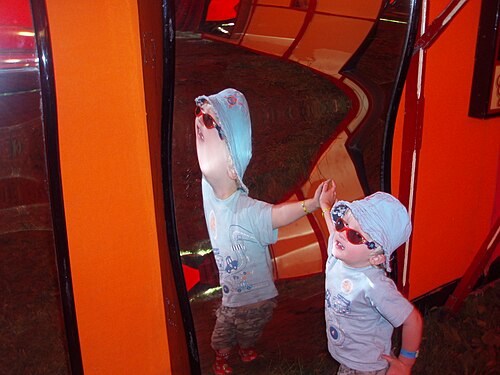
The appeal is easy to understand. Unlike a ride that simply carries you, this attraction asks you to think, and everyone in your group can compare how well they did. It is short enough for a quick stop and engaging enough to talk about afterwards.
The difference between a mirror maze and a house of mirrors
The terms overlap, but they are not identical. A house of mirrors, also called a hall of mirrors, is the broader attraction: a room or set of rooms lined with reflective and distorted glass, often part of a funhouse. The maze element is what turns that room into a puzzle you have to solve.
In practice, most modern venues combine both ideas. You might find a funhouse mirror maze with warped panels at the entrance for comedy photos, then a serious reflective labyrinth further inside. The word maze describes the structure; house of mirrors describes the style of the space.
| Feature | Mirror maze | House of mirrors |
|---|---|---|
| Main goal | Find the correct route to the exit | Enjoy the reflections and illusions |
| Layout | Corridors, turns, and dead ends | Rooms and panels, often open plan |
| Mirror types | Mostly flat mirrors plus glass panes | Flat, convex, and concave mirrors |
| Typical setting | Amusement park or funfair attraction | Funhouse, carnival, or museum exhibit |
| Time inside | Usually a few minutes to half an hour | Often a short walk-through |
Why visitors love the challenge
The pleasure comes from a conflict your brain cannot immediately resolve. Your eyes report open space, your hands meet solid glass, and you have to override instinct with observation. That small struggle is genuinely fun, and it is why the format has survived alongside newer attractions such as the escape room.
There is also a social side. Groups naturally split up, call to each other, and laugh when someone walks straight into a panel. Children often solve it faster than adults because they rely less on assumptions about where a corridor should lead.
A practical note: capacity and opening hours vary by venue, so check the official website before you travel. That single habit prevents most disappointing visits.
How Does a Mirror Maze Actually Work?
A mirror maze works by combining flat mirrors, curved mirrors, and clear glass panes so that reflections hide real openings and reveal fake ones. Flat mirrors duplicate corridors that do not exist, glass panes block routes you can see through, and curved mirrors distort your own body, making distance and direction much harder to judge.
The design is deliberate rather than random. Every panel is placed so that sightlines from one point suggest a route that is physically closed, and the exit is usually visible long before it is reachable.
The role of convex and concave mirrors
Curved surfaces do the heavy lifting when it comes to confusion and comedy. A convex mirror, which bulges outward, compresses a wide view into a small area, so your reflection looks short and the room looks larger than it is. A concave mirror, which curves inward, stretches and magnifies, making you appear tall and thin.
These distorted mirrors are also used for safety and orientation. A convex mirror placed high in a corner shows staff a wide sweep of the corridor, while a concave panel can make a nearby wall seem further away than it really is. When you see your own shape change dramatically, you have found a curved mirror rather than a flat one.
Glass panes, dead ends, and illusions
Clear glass is the quiet workhorse of the whole attraction. Because it reflects almost nothing, a pane can sit directly across a corridor and remain nearly invisible, turning what looks like an open passage into a solid wall. Combine several panes with mirrors and you get the classic effect of endless passageways that lead nowhere.
Here is a simple way to read the space as you move:
- Look at the floor first. Floor lines, seams, and scuff marks continue through real openings but stop at glass.
- Check the frame. Mirrors and panes usually sit in visible edges, and a frame that meets the floor signals a barrier.
- Move slowly and keep one hand slightly forward, at chest height, so you feel a panel before you walk into it.
- Follow other visitors’ voices. Sound travels through genuine gaps and is muffled by solid panels.
- Mark your turns mentally. If you keep turning the same way, you will circle rather than progress.
Pro Tip
Wear flat shoes with a little grip and avoid loose bags. A stable stance makes it far easier to test a panel gently with your hand instead of walking into it, and you will move through the maze much faster.
A Quick History of the Mirror Maze
Mirror maze history begins with the celebrated hall of mirrors at the Palace of Versailles, where reflective surfaces were used to expand and dramatise interior space. From that aristocratic idea came the fairground version, refined and patented in the late nineteenth century and exported around the world as popular entertainment.
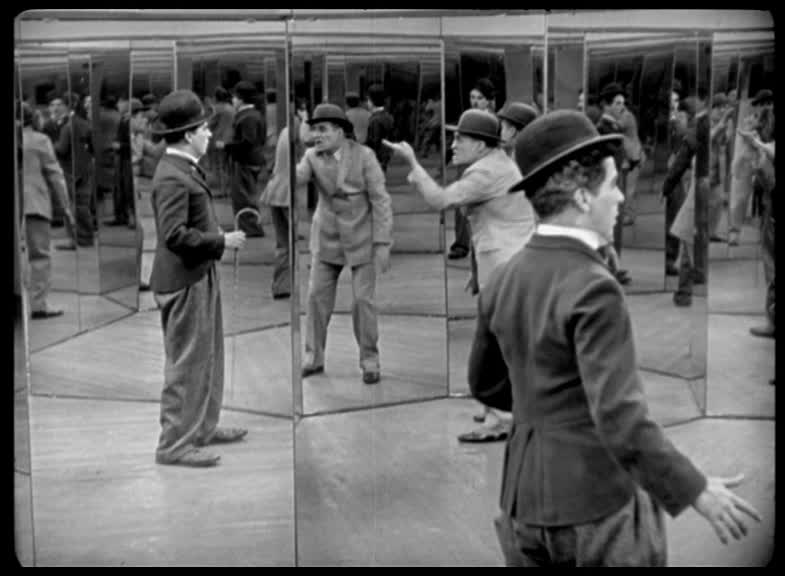
The attraction moved from royal decoration to public amusement because it was cheap to build, easy to transport, and guaranteed to draw a crowd. That combination made it a fixture of carnivals and seaside resorts within a single generation.
From the Palace of Versailles to Gustav Castan’s patent
The origins of the house of mirrors are generally traced to the hall of mirrors at the Palace of Versailles. Its walls of glass created an illusion of limitless space, and showmen adapted the same trick into a walkable puzzle for paying visitors.
The key figure in that transition is Gustav Castan, who patented a mirror maze in several countries between 1888 and 1895. His patent described an arrangement of mirrors in a room that produced the illusion of a labyrinth of seemingly endless passages, freely traversable until the visitor was stopped by an obstructing mirror.
That description still matches what you experience today. The technology has improved, the safety standards certainly have, but the core illusion Castan protected has barely changed in well over a century.
The Crystal Maze in Sydney, 1893
One of the earliest documented public installations appeared in Sydney in 1893. The Strand Arcade hosted an amusement called The Crystal Maze, described as an illusive arrangement of mirrors that made gardens appear to contain innumerable people, with visitors and attendants multiplied by hundreds.
That account captures why the idea spread so quickly. It was not simply a puzzle; it was a spectacle that made an ordinary space feel impossibly large. Modern operators chase the same reaction, whether the setting is a historic arcade or a purpose-built amusement park.
If you are choosing where to go, read recent visitor information on the official website and look for details about group size, lighting, and whether staff monitor the route. Those practical points matter more than the theme.
How to Choose the Best Mirror Maze for Your Day Out
Choosing the best mirror maze comes down to three things: who is going with you, how much time you want to spend inside, and whether the attraction is built for gentle giggles or genuine disorientation. A mirror maze is a walk-through puzzle of mirrored panels and glass, so the right one for a family with young children is rarely the right one for thrill-seekers.
What to check before you go
Start with the basics on the venue’s official website. Confirm opening hours, whether tickets are timed, and whether you can buy entry on arrival. Look for a floor plan or a short description of the route, because a compact mirror maze at a small funfair attraction feels very different from a large multi-room build at a major amusement park.
Next, check the practical details that decide whether your visit runs smoothly:
- Route length and exit options — some layouts have emergency exits every few metres, others only at the end.
- Group size limits — smaller groups see fewer reflections of other visitors, which makes navigation easier.
- Accessibility — ask about wheelchair access, narrow corridors and low-light sections.
- Footwear rules — socks or soft soles are often required to protect the mirrored floor panels.
- Peak times — quieter slots mean shorter queues and clearer sightlines.
Always check the official website for current pricing and booking policies, since these change by season and location. If the site is vague, call ahead and ask how long a typical visit lasts; most people spend anywhere from ten minutes to half an hour inside.
Family-friendly vs. thrill-focused options
Family-friendly mirror mazes usually rely on wide corridors, bright lighting and gentle distortion. The funhouse mirror maze style, with its wobbling convex mirror and concave mirror panels, is designed for laughter rather than fear, and staff are normally positioned along the route to help anyone who gets stuck.
Thrill-focused versions lean into darkness, strobe lighting, sudden sound effects and tighter dead ends. These suit teenagers and adults who want the disorientation that made the attraction famous, but they can overwhelm younger children or anyone prone to claustrophobia. If you are unsure which category a venue falls into, read the age recommendations on its website before booking.
| Feature | Family-friendly | Thrill-focused |
|---|---|---|
| Lighting | Bright and even | Dim, strobe or coloured |
| Corridor width | Wide, easy to pass | Narrow, single file |
| Mirror type | Mostly flat with some distortion | Heavy distortion and tinted glass |
| Staff presence | Regular checkpoints | Minimal, exit at the end only |
| Best for | Young children, mixed ages | Teens and adults |
What Mistakes Should You Avoid Inside a Mirror Maze?
The biggest mistake inside a mirror maze is rushing. Speed makes you trust your eyes, and your eyes are exactly what the attraction is designed to trick. Walk slowly, keep one hand lightly in front of you, and treat every reflection as a possible illusion rather than a real corridor.
Common wrong turns and how to stay oriented
Most wrong turns happen because visitors follow a reflection of a corridor instead of the corridor itself. Glass panes placed at junctions create the impression of open space, while a genuine opening can look like a solid wall. The result is the endless-passage illusion that Gustav Castan described in his patent: passages that appear freely traversable until an obstructing mirror stops you.
- Pick a hand rule. Keep your right hand on the wall and follow it consistently; this turns a confusing labyrinth into a single continuous route.
- Look at the floor. Reflections rarely match the floor pattern perfectly, so seams and scuff marks reveal real walls.
- Watch the edges. Real panels have frames, gaps or slight thickness that reflections do not reproduce.
- Pause and listen. Voices of people ahead tell you which direction leads onward.
- Do not spin around. Turning in circles destroys your sense of direction faster than any mirror can.
If you do get disoriented, stop moving, stand still for a few seconds and re-establish which way you came from. Most venues also place staff or marked exits at intervals, so use them rather than pressing on out of pride.
Safety and comfort tips
Safety inside a mirror maze is mostly about controlled movement. Walk rather than run, keep your hands at chest height instead of outstretched, and avoid pushing on panels to test whether they are doors. Mirrored glass can be delicate, and leaning your full weight on it is the fastest way to spoil the visit for everyone.
Comfort matters too. Wear flat, soft-soled shoes, leave large bags in a locker if one is available, and agree on a meeting point outside in case your group separates. Anyone with claustrophobia, balance problems or sensitivity to flashing lights should check the venue’s description first, and parents of young children should stay within arm’s reach throughout.
Mirror Maze Alternatives and Related Attractions
If a mirror maze is closed, too crowded or simply not your group’s style, several related attractions deliver a similar mix of puzzle-solving and sensory surprise. Escape rooms, funhouses and curved mirror exhibits all borrow from the same tradition, and many venues run two or more of them side by side.
Escape rooms and funhouse attractions
An escape room replaces mirrored trickery with locks, codes and narrative objectives. You get a clear goal and a time limit, which suits people who prefer teamwork to disorientation. A traditional funhouse, by contrast, keeps the playful spirit of the house of mirrors but adds moving floors, rotating tunnels and air jets.
Both are worth considering as a companion activity. An escape room rewards logic, while a mirror maze rewards patience and spatial awareness, so a group with mixed preferences can often split the day between the two.
Curved mirror exhibits and beyond
Curved mirror exhibits focus on distortion rather than navigation. A convex mirror shrinks and widens your reflection, while a concave mirror stretches and inverts it, producing the comic effects that made the hall of mirrors a staple of carnivals for more than a century. Science museums often present the same optics with explanatory labels, which makes them a good option for curious children.
The tradition itself reaches back further than most visitors realise. The idea grew out of the hall of mirrors at the Palace of Versailles, and Castan patented his mirror maze in several countries between 1888 and 1895. In 1893, Sydney’s Strand Arcade hosted an attraction called The Crystal Maze, an arrangement of mirrors that multiplied visitors and attendants by the hundreds. That same sense of wonder still draws crowds today.
Popular culture has kept the format alive as well. The Phantom of the Opera used a mirror trap to protect a lair, Orson Welles staged a shootout in a maze of mirrors, and modern films continue to use reflective corridors for tension. If you enjoy spotting those references, a visit becomes a small piece of mirror maze history as well as a day out.
Looking for more helpful guides? Explore more articles on MirMaze.
Frequently Asked Questions About Mirror Maze
A mirror maze is a walk-through attraction built from mirrored panels, glass panes and sometimes distorted mirrors, arranged so that visitors must find their way through a puzzle of apparent corridors. It appears at funfairs and amusement parks worldwide, and it is closely related to the traditional house of mirrors.
What is a mirror maze?
A mirror maze is a maze-like puzzle made from a large number of mirrors, glass panes and reflective surfaces. Visitors walk through it trying to reach the exit while reflections create the illusion of passages that do not exist. Some versions add curved, convex or concave mirrors to distort reflections for comic or unsettling effect.
How do you solve a mirror maze?
Move slowly and keep one hand on a wall to follow a single continuous route. Watch the floor for seams and scuff marks that reveal real panels, and look for frame edges that reflections do not reproduce. Pause when you feel disoriented, listen for voices ahead, and use staff or marked exits if you get stuck.
Are mirror mazes safe for kids?
Yes, most mirror mazes are safe for children when basic rules are followed. Walk instead of running, keep hands away from pushing on glass, and stay within arm’s reach of younger children. Family-friendly venues use bright lighting, wide corridors and regular staff checkpoints. Check the venue’s age guidance and accessibility notes before your visit.
What is the difference between a mirror maze and a house of mirrors?
The terms overlap heavily. A house of mirrors is the broader traditional attraction, often including distorted mirrors and novelty effects alongside the puzzle. A mirror maze emphasises navigation: a route through mirrored panels and glass that you must solve. Many venues use both names for the same experience.
Where was the first mirror maze built?
The concept traces back to the hall of mirrors at the Palace of Versailles. Gustav Castan patented a mirror maze in several countries between 1888 and 1895, describing endless apparent passages. In 1893, Sydney’s Strand Arcade hosted The Crystal Maze, an illusive arrangement of mirrors that appeared to multiply visitors by the hundreds.
Final Thoughts on Mirror Maze
A mirror maze is one of the few attractions that has stayed genuinely surprising for well over a century. From the mirrored halls of Versailles to Castan’s patents and Sydney’s Crystal Maze, the appeal has never changed: reflections that make you doubt your own eyes, and a puzzle you solve with patience rather than speed.
Choose a venue that matches your group, go in with a simple strategy, and give yourself permission to slow down and enjoy the confusion. Check the official website for current opening times, pricing and age guidance, then book a slot and see how quickly you can find your way out.